SMGS Consignment Note: Complete Guide for International Rail Freight Shippers

Study time: 15
SMGS Consignment Note: Complete Guide for International Rail Freight Shippers

What Is SMGS in International Rail Freight?

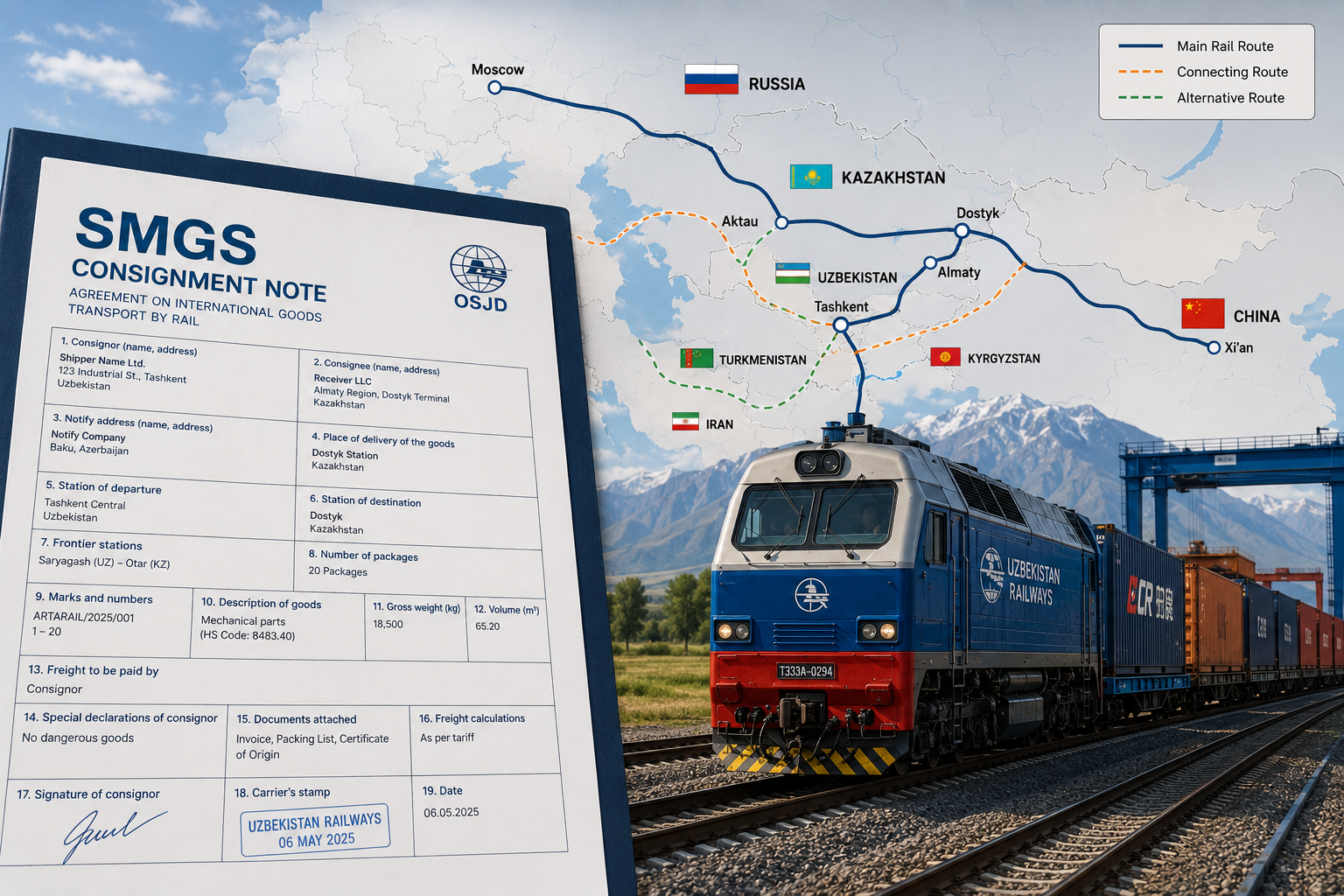
International rail freight relies on standardized documentation to ensure that cargo can move efficiently across multiple countries, railway administrations, and customs jurisdictions. Among the most important documents used throughout Eurasia is the SMGS Consignment Note, a transport document that serves as both a contract of carriage and a key source of shipment information for carriers, customs authorities, freight forwarders, and consignees.

For companies shipping goods to Central Asia, the CIS region, China, or other destinations connected to the Eurasian rail network, understanding the role of SMGS documentation is essential. In fact, many cross-border rail shipments cannot proceed without properly completed transport documents that comply with the rules of the railway systems involved.

Understanding the Meaning of SMGS

SMGS stands for the Agreement on International Goods Transport by Rail, a legal framework used across many countries in Central Asia, Eastern Europe, the CIS, and parts of Asia. The agreement establishes common rules for international rail cargo movements and provides a standardized documentation system for participating railway networks.

Unlike maritime transport, where bills of lading dominate documentation processes, international rail freight often depends on consignment notes that accompany cargo throughout its journey. Consequently, the SMGS Consignment Note becomes one of the most important documents in the rail freight supply chain.

The document contains detailed information about the shipment, including:

Information Category Examples
Cargo Details Product description, weight, packaging
Shipper Information Exporter or sender details
Consignee Information Receiver details
Route Information Origin, destination, transit countries
Railway Data Carrier information and operational references
Customs Data Supporting information for border procedures

As a result, the document functions as a central source of information for all parties involved in the transportation process.

Why SMGS Documentation Matters

International rail shipments often cross multiple borders before reaching their final destination. Therefore, authorities require accurate and consistent shipment information to maintain visibility, compliance, and operational efficiency.

Without a properly prepared SMGS Consignment Note, companies may face:

Potential Issue Operational Impact
Incorrect shipment data Customs delays
Missing consignee information Delivery complications
Documentation discrepancies Border inspections
Incomplete cargo descriptions Regulatory issues
Data mismatches with invoices Clearance delays

Moreover, rail operators depend on accurate documentation to coordinate cargo handovers between railway administrations. Even a small documentation error can create delays that affect the entire transport schedule.

For this reason, freight forwarders and logistics providers usually review SMGS documentation before cargo is loaded onto rail wagons.

Where Is the SMGS System Used?

The SMGS framework is widely applied across countries that participate in Eurasian rail freight networks. It plays a particularly important role in regions where rail transport serves as a primary mode of international trade.

Some of the most relevant markets include:

Region Typical Use of SMGS
Central Asia International rail cargo movements
CIS Countries Cross-border freight transport
China Eurasian rail connections
Mongolia International rail trade
Eastern Europe Selected rail corridors
Eurasian Transit Routes Multinational freight movements

Furthermore, the document is frequently encountered on cargo routes connecting Iran with major Central Asian destinations such as Kazakhstan, Uzbekistan, Turkmenistan, and Tajikistan.

Because these corridors involve multiple railway administrations and customs authorities, documentation consistency becomes increasingly important as shipments move across borders.

SMGS and the Growth of Eurasian Rail Freight

Over the last decade, Eurasian rail corridors have become increasingly important for international trade. Businesses are looking for alternatives that offer a balance between cost, reliability, and transit time. As a result, rail freight volumes across Central Asia and neighboring regions have continued to grow.

At the same time, documentation requirements have become more complex. Cargo owners must ensure that transport documents align with customs declarations, commercial invoices, packing lists, and operational railway records.

Therefore, understanding the fundamentals of the SMGS system is no longer relevant only for railway operators. Exporters, importers, logistics managers, procurement teams, and freight forwarders all benefit from understanding how SMGS documentation supports the movement of cargo across international rail networks.

In the following sections, we will examine the SMGS Consignment Note itself, explore its required fields, explain when it is required, and review the most common documentation mistakes that can lead to costly shipment delays.
What Is an SMGS Consignment Note?

After understanding the role of SMGS within international rail freight, the next step is to examine the document itself. The SMGS Consignment Note is the primary transport document used for rail shipments moving under the SMGS legal framework. It accompanies cargo throughout its journey and serves as a formal record of the transportation agreement between the shipper and the railway carrier.

In practical terms, the SMGS Consignment Note acts as the backbone of a rail shipment. It contains the information needed by railway operators, customs authorities, freight forwarders, and consignees to identify, process, transport, and deliver cargo correctly.

Without this document, international rail transport across many Eurasian routes would face significant operational and administrative challenges.

SMGS Consignment Note infographic showing the document workflow between shipper, rail carrier, customs authority, and consignee, along with its key functions in international rail freight and cross-border logistics.

The SMGS Consignment Note is the primary rail freight document used across Central Asia, CIS countries, and Eurasian rail corridors, supporting cargo identification, customs compliance, and cross-border rail transport.

The Purpose of an SMGS Consignment Note

The primary purpose of the document is to create a standardized system for exchanging shipment information across different railway administrations.

Since international rail freight often passes through several countries, all participating parties need access to consistent shipment data. Therefore, the SMGS Consignment Note ensures that essential cargo information remains available from origin to destination.

The document typically serves several functions simultaneously:

Function Purpose
Transport Contract Records the agreement between shipper and carrier
Shipment Identification Identifies the cargo being transported
Operational Reference Supports railway handling procedures
Customs Support Provides information used during border inspections
Cargo Tracking Helps monitor shipment progress
Delivery Verification Confirms cargo arrival and receipt

As a result, the document becomes one of the most important records associated with an international rail shipment.

What Information Does the Document Contain?

An SMGS Consignment Note includes a wide range of operational and commercial information. The accuracy of this data is critical because it is often reviewed by multiple organizations during transit.

Although requirements may vary depending on the route and railway administration, the document commonly includes the following information:

Data Category Typical Information
Shipper Details Company name, address, contact information
Consignee Details Receiver information and destination details
Cargo Description Commodity type and cargo specifications
Weight Information Gross weight and shipment measurements
Packaging Details Number and type of packages
Origin Station Departure railway station
Destination Station Final delivery station
Railway References Operational transport codes
Customs Information Data supporting border clearance procedures

Because customs authorities frequently compare shipment documents against commercial invoices and packing lists, even small discrepancies can trigger additional inspections or administrative delays.

Who Uses the SMGS Consignment Note?

The document is not designed for a single stakeholder. Instead, it supports communication and coordination among multiple participants throughout the transport chain.

The following parties typically rely on SMGS documentation:

Participant Why It Uses the Document
Shipper Provides cargo information
Freight Forwarder Coordinates documentation and transport planning
Railway Carrier Executes transportation operations
Customs Authority Reviews shipment information
Border Agencies Verify cargo movement across borders
Consignee Confirms receipt of goods

Consequently, the quality of the information entered into the document affects every stage of the shipment lifecycle.

Why Accuracy Is So Important

One of the most common causes of rail freight delays is inaccurate or incomplete documentation. While rail networks are designed to move cargo efficiently, documentation errors can quickly disrupt the process.

For example, inconsistencies between the SMGS Consignment Note and supporting documents may lead to:

Documentation Issue Possible Consequence
Incorrect cargo description Customs verification requests
Wrong consignee details Delivery delays
Weight discrepancies Additional inspections
Missing shipment data Administrative processing delays
Incorrect station information Routing complications

Furthermore, correcting documentation after a shipment has already entered the rail network is often more complicated and time-consuming than resolving issues before departure.

How the SMGS Consignment Note Supports Cross-Border Rail Freight

Unlike domestic transport documents, the SMGS Consignment Note is specifically designed for international rail movements that cross national borders and involve multiple railway systems.

This is particularly important for shipments moving through Central Asia, the CIS region, and broader Eurasian rail corridors. In these environments, railway operators, customs agencies, and logistics providers must coordinate across different jurisdictions while maintaining consistent shipment information.

Therefore, the SMGS Consignment Note acts as a common operational language that helps facilitate the movement of cargo between countries, railway administrations, and border authorities.

In the next section, we will examine why the SMGS Consignment Note is especially important for international shippers and how it helps reduce operational risks, customs complications, and documentation-related delays.

Why the SMGS Consignment Note Matters for International Rail Freight Shippers

For many exporters and importers, documentation is often viewed as a routine administrative task. However, in international rail freight, documentation can directly influence transit times, customs efficiency, cargo visibility, and overall shipment reliability. This is why the SMGS Consignment Note plays such an important role in cross-border rail transportation.

The document is far more than a transport form. It acts as a communication tool that connects shippers, freight forwarders, railway operators, customs authorities, and consignees throughout the shipment journey. As rail freight networks continue to expand across Central Asia and Eurasia, accurate documentation has become increasingly important for ensuring smooth cargo movement.

SMGS Consignment Note infographic showing faster border processing, customs compliance, fewer documentation errors, and the international rail freight shipment process across Central Asia and CIS rail corridors.

The SMGS Consignment Note helps international rail freight shippers improve customs compliance, reduce documentation errors, and streamline cross-border shipments across Central Asia, CIS countries, and Eurasian rail corridors.

Reducing Delays Across International Rail Corridors

One of the primary benefits of an SMGS Consignment Note is its ability to support efficient cargo processing across multiple railway administrations.

International rail shipments frequently move through several countries before reaching their final destination. Consequently, authorities require a standardized method for identifying cargo and validating shipment information.

When documentation is accurate and complete, border procedures can often be processed more efficiently.

Documentation Quality Operational Impact
Complete and accurate Faster document verification
Consistent shipment data Reduced administrative checks
Correct consignee information Smoother delivery process
Accurate cargo description Fewer customs questions
Proper route information Improved transit coordination

By contrast, inaccurate information can create delays that affect the entire transport chain.

Supporting Customs and Border Procedures

Customs authorities rely heavily on shipment documentation when evaluating cargo entering or transiting their jurisdictions.

Because the SMGS Consignment Note contains essential shipment information, customs officials often compare it with supporting documents such as:

Supporting Document Purpose
Commercial Invoice Cargo value verification
Packing List Cargo quantity verification
Customs Declaration Regulatory compliance
Certificates of Origin Trade preference eligibility
Inspection Certificates Commodity-specific requirements

Therefore, consistency between these documents is critical.

Even minor discrepancies can result in additional inspections, requests for clarification, or administrative reviews that extend transit times.

Improving Cargo Visibility and Shipment Control

Another important advantage of SMGS documentation is its role in shipment visibility.

International rail freight involves numerous operational handovers. Cargo may pass through different railway administrations, border terminals, and customs checkpoints before reaching its destination.

As a result, stakeholders need a reliable source of shipment information throughout the process.

The SMGS Consignment Note helps support:

Operational Function Benefit
Cargo identification Easier shipment tracking
Route verification Better transport planning
Railway coordination Improved handovers
Consignee validation Reduced delivery risk
Customs communication Faster information exchange

Consequently, the document contributes to greater transparency across the supply chain.

Managing Risk in Eurasian Rail Freight

Risk management has become a major priority for companies shipping goods through Eurasian rail corridors.

Businesses transporting cargo to destinations such as Kazakhstan, Uzbekistan, Tajikistan, Turkmenistan, China, and other regional markets must navigate multiple regulatory and operational environments.

In this context, documentation accuracy becomes a risk-control mechanism.

Common risks associated with poor SMGS documentation include:

Risk Category Potential Consequence
Data mismatch Customs delays
Missing information Shipment processing issues
Incorrect cargo details Border inspections
Wrong consignee data Delivery complications
Incomplete records Administrative penalties

Accordingly, many freight forwarders perform documentation reviews before cargo is loaded onto rail wagons.

Why Professional Documentation Review Matters

Preparing rail freight documentation may appear straightforward, yet international shipments often involve complex routing, multiple transit countries, and varying customs requirements.

For this reason, logistics providers typically verify shipment details before departure to reduce the likelihood of documentation-related disruptions.

A professional review process often focuses on:

  • Cargo description accuracy
  • Consignee verification
  • Station and route validation
  • Customs data consistency
  • Supporting document alignment
  • Cross-border compliance requirements

As a result, companies can reduce operational uncertainty while improving shipment reliability.

Final Thoughts

The SMGS Consignment Note is one of the most important documents used in international rail freight. It supports cargo identification, customs processing, railway coordination, and cross-border transportation throughout the Eurasian rail network.

More importantly, accurate SMGS documentation helps businesses minimize delays, improve shipment visibility, and reduce operational risk when moving goods across Central Asia, CIS countries, and other international rail corridors.

As rail freight continues to grow as a strategic transport solution for long-distance trade, understanding how the SMGS Consignment Note works is becoming increasingly important for exporters, importers, logistics managers, and freight forwarders alike.

FAQs for SMGS Consignment Note

What does SMGS stand for?

SMGS stands for the Agreement on International Goods Transport by Rail, a framework used across many Eurasian railway networks.

Which countries commonly use SMGS documentation?

SMGS is widely used across CIS countries, Central Asia, China, Mongolia, and several Eurasian rail corridors.

Is an SMGS Consignment Note the same as a rail waybill?

The SMGS Consignment Note functions as an international rail waybill and serves as the primary transport document under the SMGS system.

Who prepares the SMGS Consignment Note?

The document is typically prepared using information provided by the shipper and may be reviewed by freight forwarders and railway operators.

Can documentation errors delay a rail shipment?

Yes. Incorrect cargo descriptions, consignee information, or supporting documentation can result in customs checks and border delays.