
Iran to Uzbekistan

Rail Freight from Iran to Uzbekistan

Iran to Uzbekistan

Rail freight from Iran to Uzbekistan gives steel producers, construction-material suppliers and industrial exporters access to Central Asian markets through the Sarakhs–Turkmenistan–Farap corridor. Arta Rail plans the wagon, route, cross-border documents and destination delivery for steel, rebar, project cargo, polymers and approved Jet A-1 aviation turbine fuel shipments.

Get Consultation

Rail export of steel, rebar, construction materials and Jet A-1 to Uzbekistan

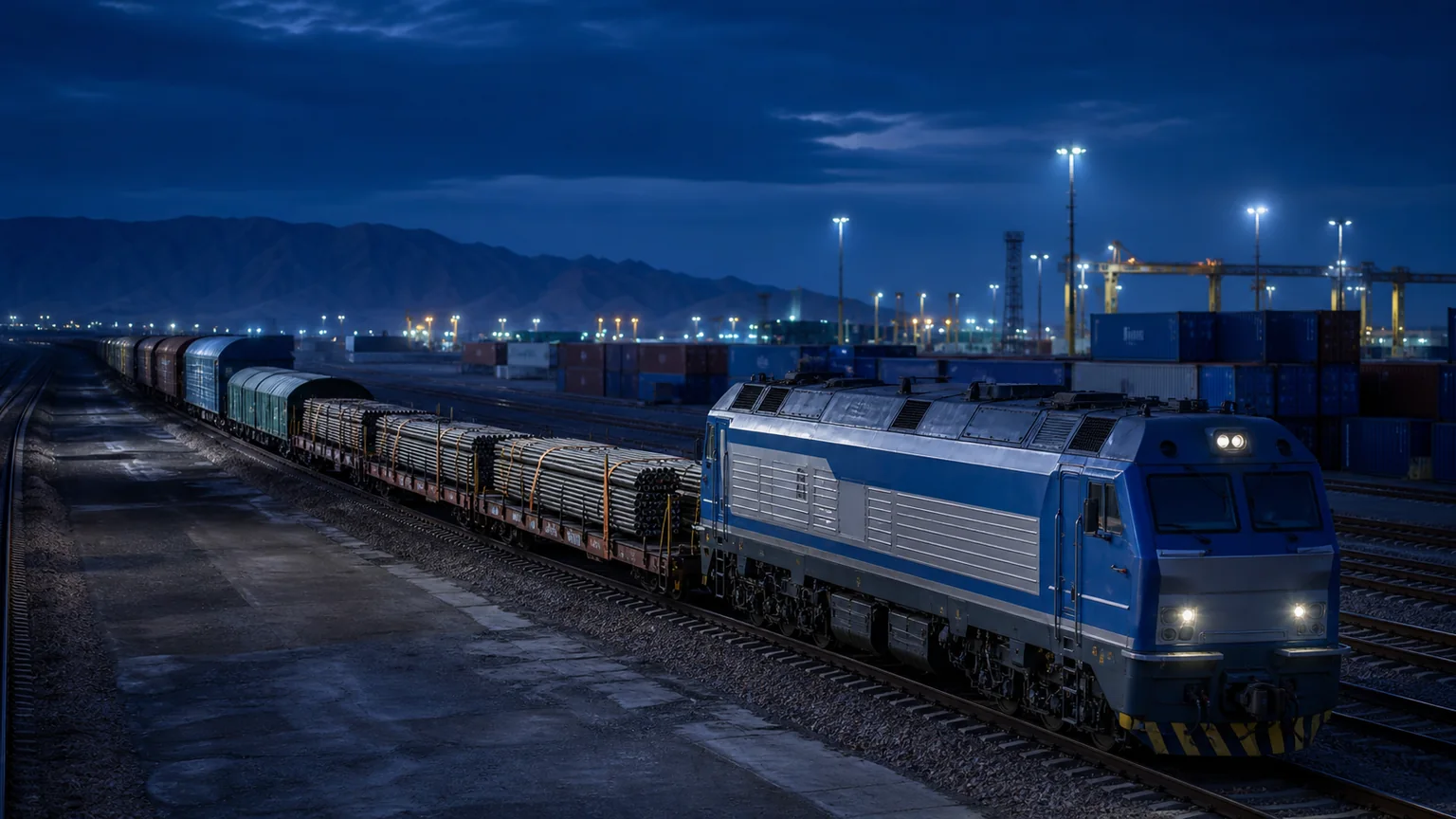
Freight train carrying steel and rebar on the rail route from Iran to Uzbekistan
Rail freight for steel, construction materials and industrial cargo from Iran to Uzbekistan
Central Asia rail corridor

How is rail freight from Iran to Uzbekistan planned?

A common routing moves cargo from the Iranian railway network through the Sarakhs rail border into Turkmenistan, continues toward Farap, enters Uzbekistan and proceeds to the agreed destination station.

A workable quotation requires more than the country name. The factory or warehouse location, access to a loading station, cargo dimensions, unit weights, packaging, lifting facilities, destination station and final delivery terms must be reviewed together. Arta Rail checks these details before matching the shipment with a wagon and corridor.

Iran uses standard gauge while the Central Asian network uses 1,520 mm broad gauge. Border procedures and the method used to continue the shipment must therefore be included in the operating plan from the start.

Operational note: transit time and price cannot be guaranteed by a generic country-to-country estimate. A shipment-specific range is issued after wagon availability, documentation and network acceptance are checked.
Cargo expertise

What goods can be exported from Iran to Uzbekistan by rail?

Rail is particularly competitive for heavy, high-volume, repetitive and project cargo. Final acceptance depends on the HS code, technical classification, permits, packaging and rules applied by every railway on the route.

Fe

Steel, rebar and metal products

Rebar bundles, beams, channels, billets and steel sheets are planned around unit length, bundle weight and destination handling facilities.

  • Open-top or flat wagon selection
  • Load distribution and securing review
  • Phased deliveries for construction projects
01

Construction materials

Tiles, ceramics, processed stone, cement-based products and related building materials require cargo-specific packaging and protection.

  • Pallets and corner protection for fragile goods
  • Axle-load control for dense cargo
  • Wagon choice for bags, big bags or bulk material
PE

Petrochemicals and industrial feedstock

Packaged polymers and selected non-hazardous industrial materials may move in covered wagons or containers after classification review.

  • Technical product name and HS code
  • SDS and dangerous-goods status
  • Packaging compliance across the corridor
XL

Machinery and project cargo

Heavy or out-of-gauge equipment requires accurate dimensions, centre of gravity, lifting points and route acceptance.

  • Loading-gauge and flat-wagon study
  • Lashing and lifting plan
  • Special permits for transit networks
J-A1

Jet A-1 aviation turbine fuel and petroleum products

Jet A-1 is aviation turbine fuel; it is different from aviation gasoline or Avgas used by piston-engine aircraft. Rail export is evaluated only after the product specification, dangerous-goods classification, permits, corridor acceptance and suitable tank-wagon availability are confirmed.

  • Certificate of analysis, SDS, HS code and flash point
  • Tank compatibility, sealing, loading and discharge controls
  • Transit permits, insurance and receiving-terminal acceptance
Aviation fuel logistics

Jet A-1 rail transport and export to Uzbekistan

Aviation fuel cannot be quoted as ordinary liquid cargo. Product standard, certificate of analysis, SDS, tariff code, shipment volume, loading terminal, receiving station and storage conditions must be known before wagon planning begins.

Arta Rail reviews access to a compatible tank wagon, acceptance by the Iranian, Turkmen and Uzbek networks, customs requirements and dangerous-goods conditions. Price and timing are issued only after the operating parties confirm the proposed movement.

Wagon engineering

Which wagon is suitable for each cargo?

Covered wagons protect packaged goods; open-top wagons serve selected steel and mineral cargo; flat wagons handle long products and machinery; container platforms support intermodal movements; specialist tank wagons are required for accepted liquid commodities.

Nominal capacity is not enough. Usable dimensions, axle load, securing, route clearance, ownership restrictions and unloading equipment at destination all affect the decision.

Freight wagon selection guideCompare typical wagon applications and limitations.
Quotation inputs

What information should you provide?

CargoExact name, HS code, weight, quantity, dimensions and photographs
PackagingBundles, pallets, bags, big bags, bulk or containers
RouteOrigin address, preferred station, destination station and final site
ScheduleCargo-ready date and one-off or phased dispatch plan
ServicesLoading, securing, customs, insurance and first/last-mile trucking
From enquiry to delivery

Iran–Uzbekistan rail freight process

Cargo definitionTechnical data, weight, dimensions, packaging and dates are recorded.
Feasibility reviewRail access, wagon, commodity restrictions and destination acceptance are checked.
Route and quotationScope, assumptions, costs and operational risks are made clear.
Booking and loadingWagon allocation, lifting, loading and securing are coordinated.
Documents and bordersData consistency and cross-border operations are followed.
Status and deliveryMovement updates and agreed delivery are managed through one contact.
Documents and responsibilities

Documents for rail export to Uzbekistan

A commercial invoice, packing list, customs declaration, certificate of origin and commodity-specific certificates may be required. Steel may need mill or technical certificates, chemicals require an SDS, and controlled products may require export, transit or import approvals.

The final document set depends on the HS code and current customs requirements. Delivery terms should clearly define cost and risk transfer between seller and buyer.

See our Incoterms guide for rail freight.

Price and schedule

What affects rail freight cost and transit time?

Loading and destination stations, wagon type and ownership, chargeable weight, securing, border operations, transit railway tariffs, customs work, season and first/last-mile services all affect cost.

Timing depends on wagon supply, train planning, document readiness, border congestion, gauge-change operations and destination acceptance. Arta Rail provides a shipment-specific operating range after these factors are reviewed.

Read more about rail freight cost factors.

One operational file

Why use Arta Rail for the Uzbekistan corridor?

  • Origin, cargo, wagon, border and destination review before quotation
  • Experience with steel, construction, liquid and project cargo
  • Coordination of booking, loading, documents and route follow-up
  • Transparent disclosure of railway and customs dependencies
  • Intermodal design for destinations without practical rail access
  • One point of contact for operational status

Which route and wagon fit your shipment?

Send the cargo name, weight, packaging, origin, destination and cargo-ready date for an operational assessment.

Request an Uzbekistan rail quote

Frequently Questions