CIM vs SMGS: Which Rail Freight Consignment Note Applies to Your Shipment?

Study time: 12
CIM vs SMGS: Which Rail Freight Consignment Note Applies to Your Shipment?

What Is a Rail Freight Consignment Note?

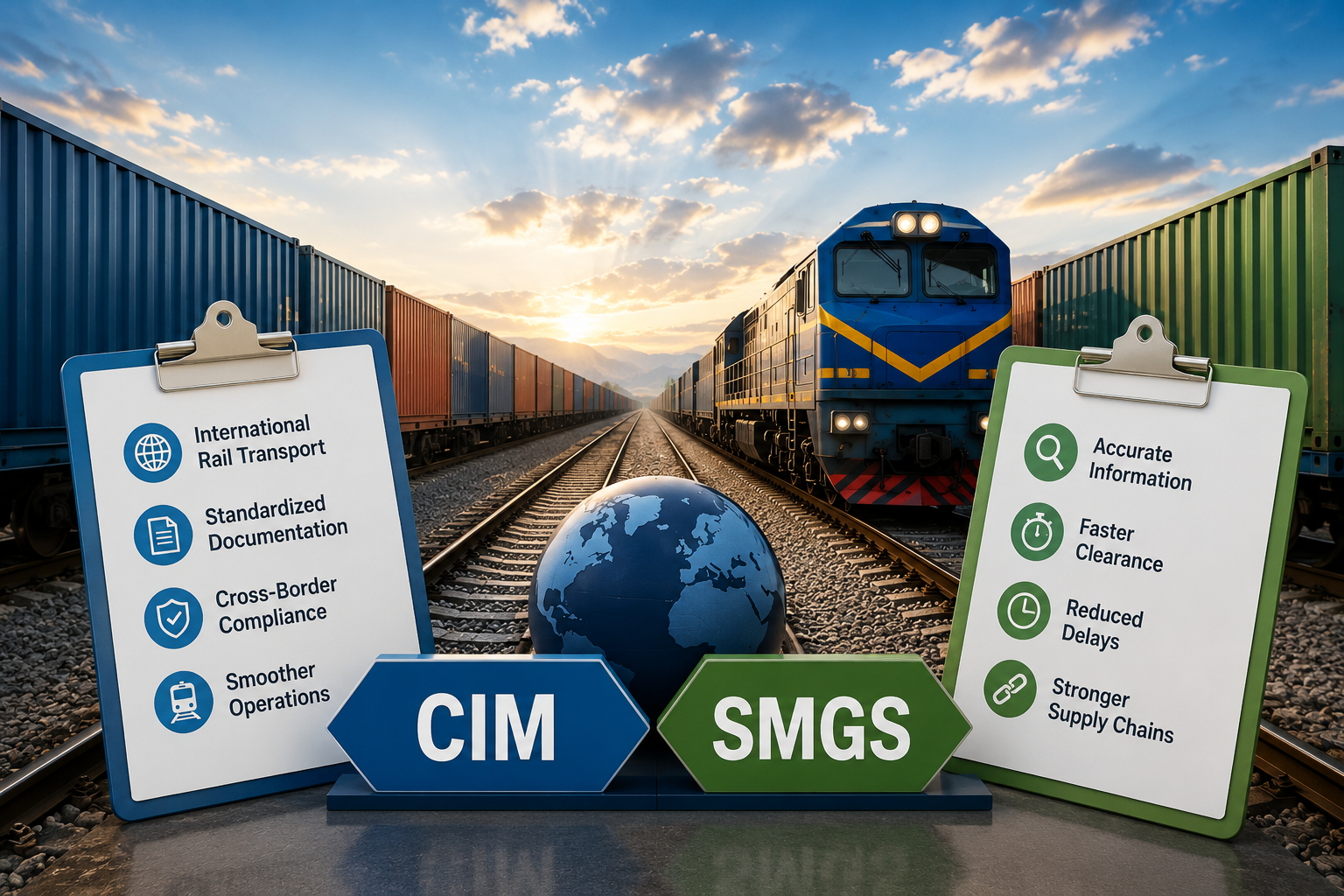
CIM vs SMGS is one of the most important documentation topics in international rail freight, especially for shipments moving between Europe, Central Asia, and CIS countries. International rail transport depends on accurate paperwork as much as it depends on tracks and locomotives. Before cargo begins its journey, the required documents must be prepared to ensure smooth cross-border operations and regulatory compliance. Among these, the rail freight consignment note serves as the primary transport document, providing essential shipment details for carriers, customs authorities, freight forwarders, and consignees throughout the journey.

The Foundation of Cross-Border Rail Transport

A rail freight consignment note is the official document that identifies a shipment and records the essential details of its transportation by rail. It typically includes information about the shipper, consignee, cargo description, loading station, destination, and transport instructions. As a result, railway operators and customs authorities can process the shipment using a standardized set of data.

At the same time, freight forwarders rely on this document to coordinate movements between different railway administrations and logistics partners. Without consistent documentation, even a routine shipment may experience avoidable delays or additional inspections.

Function Description Benefit
Shipment identification Confirms cargo and participant details Improves traceability
Transport instructions Guides railway handling Supports operational accuracy
Customs reference Provides shipment information to authorities Simplifies border procedures
Contract evidence Documents carriage arrangements Clarifies legal responsibilities
Official record Maintains shipment history Assists audits and dispute resolution

Why Accurate Documentation Matters

Errors in transport documents can interrupt even well-planned logistics operations. For example, differences between the cargo description and supporting paperwork may trigger additional verification procedures at border crossings. Consequently, transit times may increase and administrative costs can rise.

In addition, accurate documentation helps railway operators exchange information more efficiently. Exporters, importers, customs brokers, and logistics providers all benefit when shipment details remain consistent throughout the journey. Therefore, reviewing documents before dispatch is considered a best practice in international rail freight.

How Is It Different from Other Shipping Documents?

Although many trade documents serve similar purposes, they are not interchangeable. Unlike a bill of lading used in maritime transport or an air waybill used for air cargo, a rail freight consignment note is specifically designed for railway operations and international rail agreements.

Document Transport Mode Primary Purpose
Rail Freight Consignment Note Rail Documents rail shipments and operational details
Bill of Lading (B/L) Sea Governs ocean freight and acknowledges receipt of cargo
Air Waybill (AWB) Air Supports international air cargo transportation
CMR Consignment Note Road Covers cross-border road freight movements

Preparing for the CIM vs SMGS Comparison

Choosing the correct documentation framework is just as important as selecting the right transport route. In many cases, businesses shipping across Europe and Central Asia encounter different legal systems governing international rail freight. Because of this, understanding the purpose of a rail freight consignment note is the first step toward determining whether CIM, SMGS, or a combined documentation approach is appropriate.

Ultimately, this document acts as the operational backbone of international rail logistics. In the following sections, we will examine the differences between CIM and SMGS, explain where each system is used, and highlight how proper documentation can reduce risks, improve compliance, and support more efficient cross-border rail transport.

What Is the CIM Consignment Note?

After understanding the role of a rail freight consignment note, the next step is to explore one of the two major documentation systems used in international rail transport: the CIM consignment note. This document is widely recognized across many European rail networks and plays a crucial role in facilitating cross-border shipments under a common legal framework.

Understanding the Purpose of the CIM Consignment Note

The CIM (Uniform Rules Concerning the Contract of International Carriage of Goods by Rail) consignment note is used to document international rail shipments between countries that operate under the COTIF legal regime. Rather than serving only as an administrative form, it establishes the transport contract between the sender and the rail carrier while providing the operational details required for the movement of goods.

As a result, the CIM document helps standardize information exchange between railway companies and simplifies communication throughout the transport chain.

For exporters and logistics managers, using the correct document from the beginning can reduce unnecessary paperwork and improve shipment coordination across participating countries.

Feature Description Benefit for Shippers
Legal framework Based on the CIM Uniform Rules under COTIF Provides internationally recognized standards
Main purpose Documents the rail transport contract Creates a consistent shipment record
Typical use International rail freight between CIM member countries Supports cross-border operations
Key stakeholders Shippers, carriers, freight forwarders, customs authorities Improves coordination between parties

Where Is the CIM Consignment Note Commonly Used?

The CIM system is primarily associated with rail freight moving across many European countries and other regions that participate in the relevant international railway framework.

For example, shipments involving destinations in Western or Central Europe frequently rely on CIM documentation. However, cargo traveling toward Central Asia or parts of the former Soviet rail network may transition into areas where different documentation standards apply.

This distinction becomes especially important for businesses planning long-distance rail movements between Europe and Asia. Therefore, understanding where the CIM framework begins and ends can help avoid documentation issues during transit.

Route Scenario Typical Documentation Consideration
Rail freight within many European networks CIM commonly applies
Europe to Central Asia May require coordination between different documentation systems
Multinational rail corridors Documentation should be reviewed based on participating rail regimes
Cross-border project cargo Early verification of documentation requirements is recommended

What Information Does a CIM Consignment Note Include?

Although layouts may vary depending on operational requirements, a CIM consignment note generally contains standardized shipment information.

In most cases, the document records:

  • Name and address of the shipper
  • Name and address of the consignee
  • Departure and destination stations
  • Description of the goods
  • Number of packages or containers
  • Weight or quantity of cargo
  • Special handling instructions
  • Freight payment arrangements
  • References to supporting commercial documents

Consequently, all parties involved in the shipment can work from a consistent data set, reducing the likelihood of discrepancies during transport.

Why Does CIM Matter for International Rail Logistics?

A well-prepared CIM consignment note contributes to operational efficiency beyond simple compliance. For instance, railway operators can process cargo more quickly when shipment details are complete and accurate. Likewise, freight forwarders can coordinate border procedures and supporting documentation with greater confidence.

Another advantage is transparency. Instead of relying on fragmented information from multiple sources, carriers and logistics providers can reference a single document containing the key operational details needed throughout the rail journey.

From a risk management perspective, consistency also matters. If shipment descriptions differ between transport documents and commercial paperwork, customs authorities may request clarification or additional inspections. By contrast, carefully prepared documentation helps minimize administrative complications.

Common Situations Where CIM Is Used

Businesses may encounter the CIM framework in a variety of international logistics scenarios, including:

Business Activity How CIM Supports the Shipment
Manufacturing exports Documents cross-border rail transport
Industrial equipment shipments Records cargo details and transport conditions
Containerized rail freight Standardizes shipment information
Multimodal supply chains Complements broader documentation packages
Long-distance European rail corridors Provides a recognized contractual framework

Preparing for the Comparison with SMGS

Although the CIM consignment note is widely used in many international rail operations, it does not govern every Eurasian shipment. Meanwhile, countries across parts of Central Asia and the CIS often operate under a different documentation regime known as SMGS.

For that reason, selecting the correct consignment note depends not only on the cargo itself but also on the railway systems and legal frameworks involved in the route. In the next section, we will examine the SMGS consignment note, explore where it is commonly applied, and highlight the practical differences that every exporter and freight forwarder should understand before planning an international rail shipment.

CIM vs SMGS: Key Differences and How to Choose the Right Consignment Note

After exploring the purpose of the CIM consignment note, the next logical question is: How does it differ from SMGS, and which one should your shipment use? The answer depends on the rail networks, countries involved, and the legal framework governing the transport route. Understanding these differences before dispatch can save time, reduce documentation issues, and simplify cross-border rail operations.

What Is the SMGS Consignment Note?

The SMGS (Agreement on International Goods Transport by Rail) consignment note is the standard document used across many countries in the Commonwealth of Independent States (CIS) and large parts of Central Asia. It performs a function similar to CIM by documenting the carriage contract and providing operational information for railway authorities.

Unlike the CIM system, which is associated with the COTIF framework, SMGS follows a different legal regime and is widely applied on routes extending through countries such as Kazakhstan, Uzbekistan, and other parts of the Eurasian rail network. Therefore, exporters shipping into these regions often encounter SMGS documentation requirements.

Key Characteristics of the SMGS Consignment Note

Feature SMGS Consignment Note
Primary use International rail freight across SMGS-participating networks
Main purpose Documents the rail carriage contract and shipment details
Geographic focus CIS countries and much of Central Asia
Typical users Railway operators, customs authorities, freight forwarders, exporters
Operational value Standardizes documentation across participating rail systems

CIM vs SMGS: A Side-by-Side Comparison

Although both documents accompany rail cargo and contain similar shipment information, they are designed for different legal and operational environments.

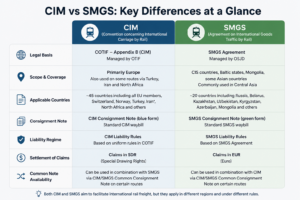
Criteria CIM SMGS
Legal framework COTIF / CIM Uniform Rules SMGS Agreement
Primary geographic use Many European rail networks CIS and Central Asian rail networks
Main purpose International rail transport contract International rail transport contract
Typical application Europe-focused rail movements Eurasian and Central Asian corridors
Cross-border use Common in COTIF member routes Common in SMGS member routes

At first glance, the differences may appear purely legal. However, they can have practical consequences for route planning, documentation workflows, and coordination between railway administrations.

Can One Shipment Involve Both CIM and SMGS?

Yes. In some cases, a single international rail shipment may pass through regions governed by different railway documentation systems.

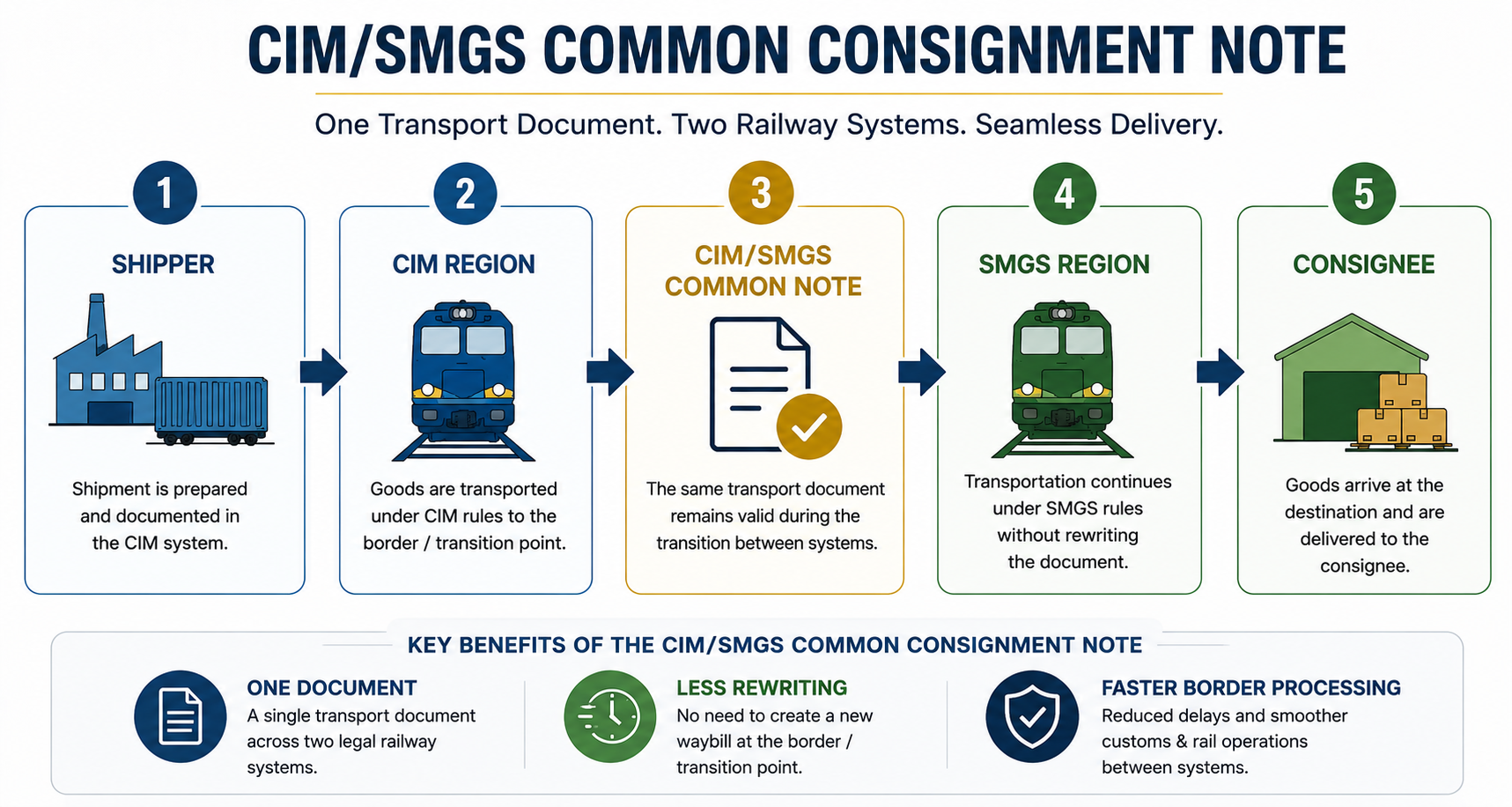
For example, cargo moving between Europe and parts of Central Asia may encounter both CIM and SMGS operational environments during its journey. To simplify these transitions, the rail industry has developed the CIM/SMGS common consignment note, which can reduce the need to recreate transport documents at interchange points.

Consequently, logistics providers handling long-distance Eurasian freight often review documentation requirements well before loading to avoid unnecessary administrative complications.

Practical Checklist for Shippers

Before preparing rail freight documentation, exporters should verify several operational factors.

Question Why It Matters
Which countries will the cargo transit? Different rail regimes may apply.
Which railway networks are involved? Determines documentation requirements.
Are customs documents consistent? Prevents border discrepancies.
Does the shipment include multimodal transport? Additional documentation may be needed.
Has the freight forwarder reviewed the paperwork? Reduces the risk of processing errors.

In addition, businesses should ensure that cargo descriptions, package counts, and consignee information remain consistent across invoices, packing lists, and transport documents.

Common Documentation Mistakes to Avoid

Even experienced exporters occasionally make errors when preparing rail paperwork. Nevertheless, many of these issues can be prevented through careful review.

Some of the most common mistakes include:

  • Inconsistent cargo descriptions between documents.
  • Incorrect shipper or consignee information.
  • Missing transport instructions.
  • Outdated supporting documentation.
  • Failing to verify which documentation framework applies to the selected route.

As a result, shipments may experience delays, additional inspections, or requests for document amendments before continuing their journey.

Decision Matrix: Which Consignment Note Is More Likely to Apply?

Shipping Scenario Likely Documentation Approach
Rail shipment within many European networks CIM
Rail shipment across much of Central Asia SMGS
Long-distance Eurasian rail corridor Route-specific assessment required
Multinational cross-border project Documentation review recommended before dispatch

This matrix is intended as a planning aid rather than a substitute for professional route verification. Railway agreements and operational requirements can vary depending on the countries and carriers involved.

Final Thoughts

Choosing between CIM and SMGS is not simply a paperwork exercise—it is an important part of planning successful international rail shipments. While both consignment notes serve the same fundamental purpose of documenting cargo movement, they operate under different legal frameworks and are commonly used across different rail networks.

Ultimately, exporters, importers, and freight forwarders should evaluate the planned route, participating countries, and railway systems before selecting the appropriate documentation. By doing so, they can improve compliance, reduce the likelihood of avoidable delays, and support more efficient cross-border rail operations.

FAQs for CIM vs SMGS

What is the main difference between CIM and SMGS?

The primary difference is the legal framework and railway network in which each document is used. CIM is associated with the COTIF regime, while SMGS is used across many CIS and Central Asian rail systems.

Can a shipment require both CIM and SMGS documentation?

Yes. Some international rail routes cross regions governed by different documentation systems, making coordinated documentation or a common CIM/SMGS approach relevant.

Is a rail consignment note the same as a bill of lading?

No. A rail consignment note is designed specifically for rail transport, whereas a bill of lading is primarily used in maritime shipping.

Who prepares a rail freight consignment note?

The document is typically prepared with input from the shipper and coordinated by the carrier or freight forwarder, depending on the transport arrangement.

Why is documentation accuracy important in rail freight?

Accurate documentation helps railway operators and customs authorities process shipments efficiently and reduces the risk of delays caused by inconsistent information.