FAQs for CIM vs SMGS
What is the main difference between CIM and SMGS?
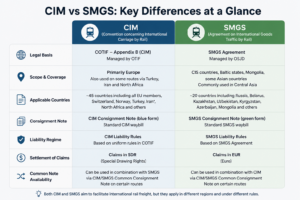
The primary difference is the legal framework and railway network in which each document is used. CIM is associated with the COTIF regime, while SMGS is used across many CIS and Central Asian rail systems.
Can a shipment require both CIM and SMGS documentation?
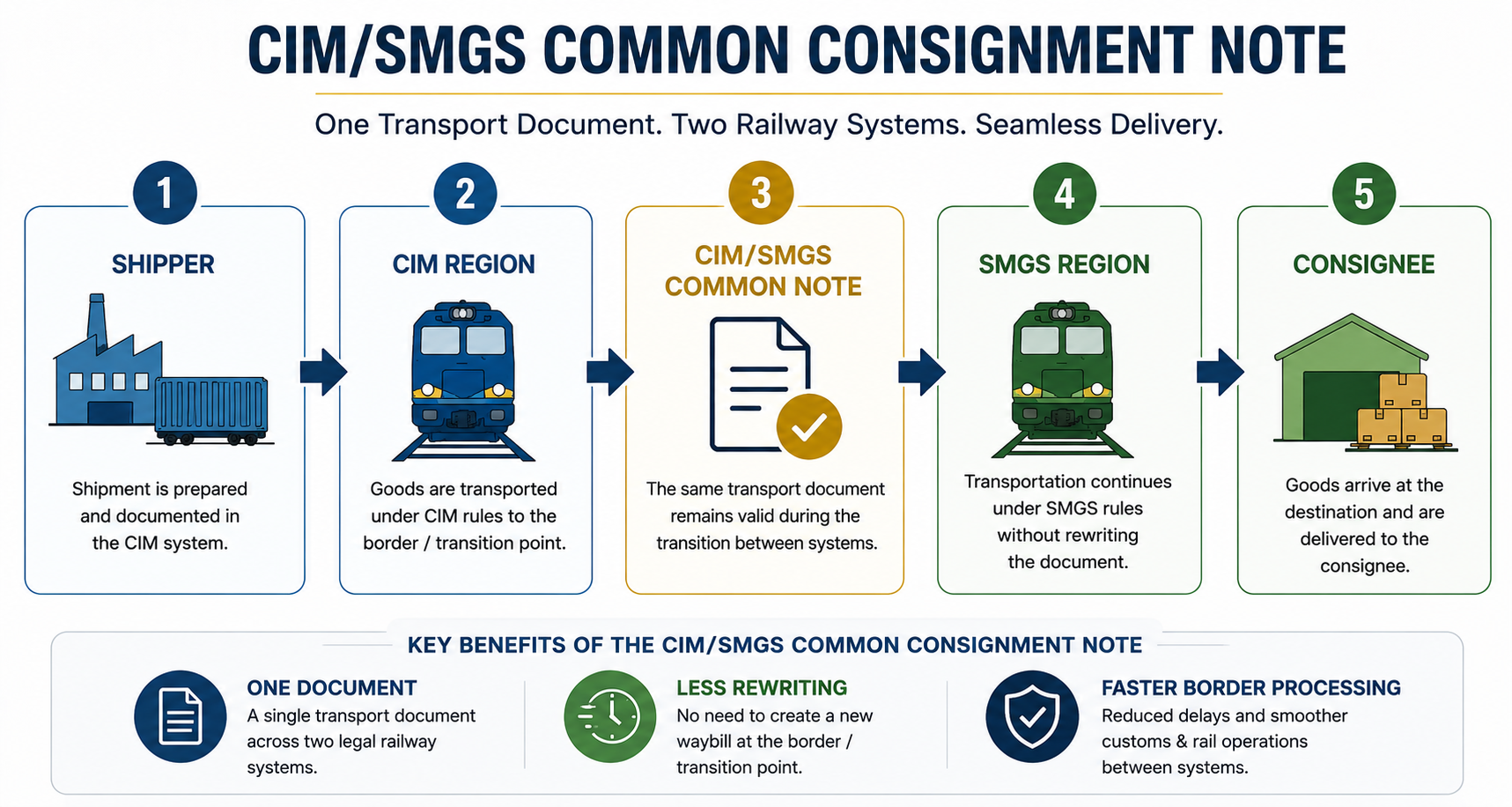
Yes. Some international rail routes cross regions governed by different documentation systems, making coordinated documentation or a common CIM/SMGS approach relevant.
Is a rail consignment note the same as a bill of lading?
No. A rail consignment note is designed specifically for rail transport, whereas a bill of lading is primarily used in maritime shipping.
Who prepares a rail freight consignment note?
The document is typically prepared with input from the shipper and coordinated by the carrier or freight forwarder, depending on the transport arrangement.
Why is documentation accuracy important in rail freight?
Accurate documentation helps railway operators and customs authorities process shipments efficiently and reduces the risk of delays caused by inconsistent information.